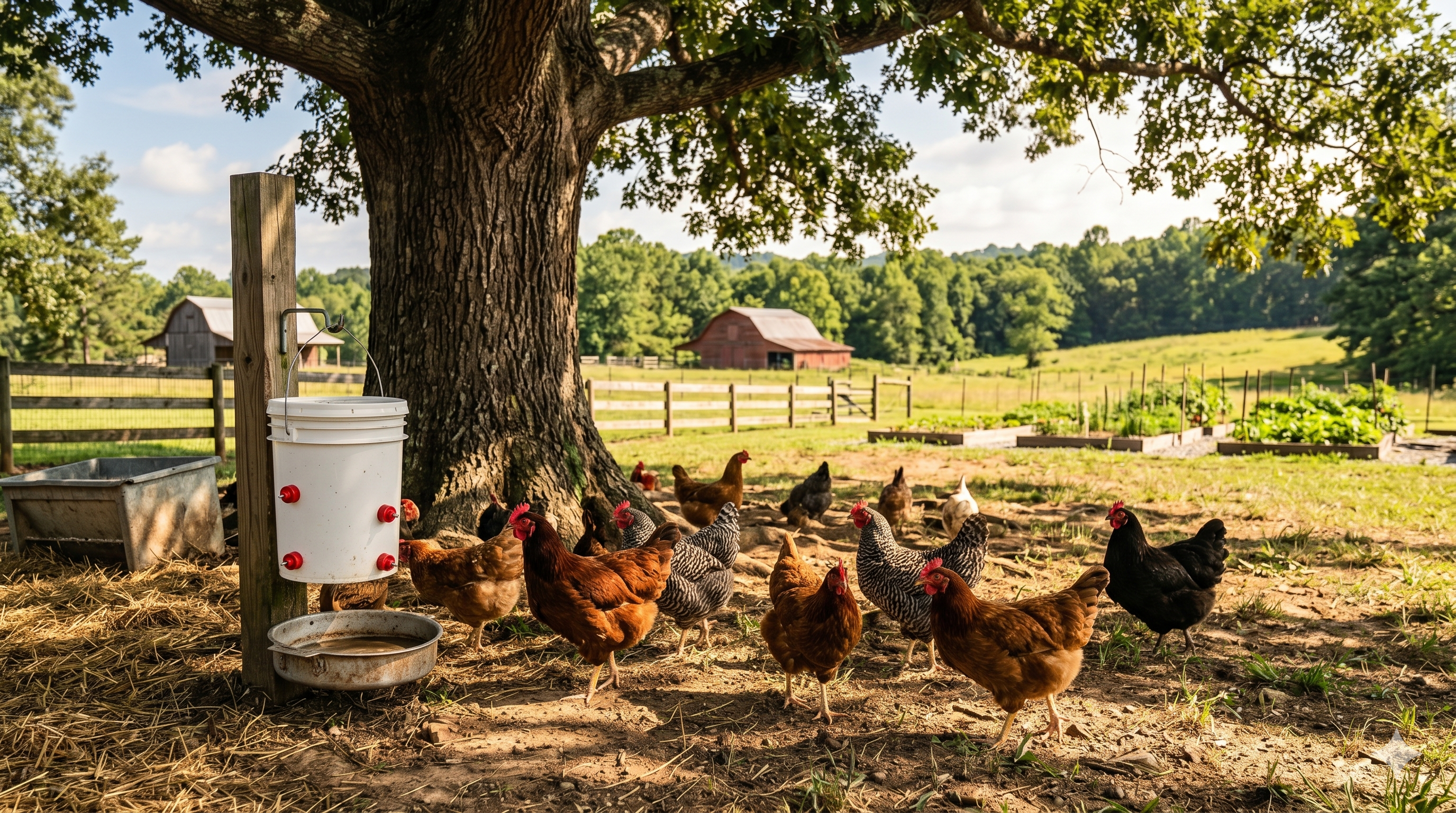
Georgia summers are no joke. By mid-June we’re regularly pushing 95°F with humidity that makes it feel like 105. Our chickens don’t have sweat glands, they can’t pant efficiently past a certain point, and heat stress can kill a bird faster than most people realize. We’ve lost birds to heat. We don’t anymore — because we got serious about how we manage the flock from June through September.
Here’s what we actually do, and what made the real difference.
Fresh Cold Water Is the Job — Do It Right
If there’s one thing that matters more than anything else, it’s water. Not just available water — cold, clean water that gets refreshed multiple times a day when it’s hot.
We switched to nipple waterers a few years back and it was one of the better decisions we’ve made for the flock. Nipple systems stay cleaner than open bowls or traditional founts, the water doesn’t heat up as fast, and chickens actually drink more from them once they figure it out. In peak summer we also drop frozen water bottles into the reservoir in the morning to keep the temperature down through the hottest part of the day.
During a heat wave — anything over 95°F — we fill a shallow rubber pan with cold water and set it in the shade. Some of our birds will wade in it. It looks ridiculous. It works.
Shade: More Than You Think You Need
Our coop has a covered run, but in July that’s not enough. The angle of the afternoon sun hits parts of the run that are shaded in the morning, and birds that looked comfortable at 9am are panting hard by 2pm.
We added shade cloth over the exposed sections of the run — 70% block is what we use. It cuts the radiant heat significantly and the birds will bunch up in those shaded spots on the worst days. We also let them free range under the tree line in the back of the property during the hottest parts of summer. They self-regulate better than you’d think if they have the option.
If your run is fully exposed, shade cloth is one of the cheapest fixes you can make. A roll goes a long way and it lasts for years.
Coop Ventilation Matters More in Summer Than Winter
A lot of coop designs are built with winter in mind — tight walls, small vents, draft protection. That’s the wrong priority in Zone 7a. Our birds are far more likely to die from heat than from cold, and a stuffy coop that holds heat after sundown is a real problem.
We keep our coop vents fully open from late May through September. We added a second vent near the roofline on the south side specifically to improve airflow. On nights where it stays above 80°F — which happens — we run a box fan on low pointed at the roost bars. The goal isn’t to blow air on the birds, it’s to move the hot air out.
Check your roost height too. Heat rises, and birds that roost high in a poorly ventilated coop are sleeping in the hottest air in the building. We lowered our roost bars one summer and it made a noticeable difference.
Electrolytes During Heat Waves
This one took us a while to take seriously. Chickens lose electrolytes when they’re heat stressed — they pant to try to cool down, and that process depletes sodium, potassium, and other minerals fast. A bird that’s mildly heat stressed but drinking plenty of plain water can still crash because the water alone isn’t restoring what’s lost.
We keep poultry electrolyte powder on hand and mix it into the water during any stretch of days over 95°F. It’s inexpensive and the difference in bird behavior is noticeable — they’re more alert, eating better, not just standing around with their mouths open.
Feed Timing and Frozen Treats
Digesting feed generates body heat. Chickens that eat a big grain meal in the middle of the day are making their own situation worse. We shifted our primary feeding to early morning and late evening during summer — they get scratch and pellets when it’s cooler, and during the heat of the day we’ll sometimes toss out cold watermelon chunks or frozen corn.
The frozen treats aren’t just a gimmick. Cold food lowers core temperature a little, and more importantly it gives them something to do and keeps them active and moving to the water. Watermelon is especially good because of the water content.
Know the Signs of Heat Stress
Panting with an open beak is the first sign. Wings held out away from the body is another — they’re trying to release heat. Lethargy, pale combs, and birds that won’t move to water are serious warning signs. At that stage you need to act fast: move the bird to a cool shaded spot, offer cold water, and wet the legs and comb with cool (not ice cold) water.
We check the flock mid-afternoon on the worst days. It takes five minutes and has saved birds. If you have older hens, heavy breeds like Buff Orpingtons or Brahmas, or any bird that’s already molting, watch them extra closely — they handle heat worse than leaner, more active breeds.
Georgia summers are brutal. But with the right setup, our flock gets through them in good shape. The basics — cold water, shade, airflow, and electrolytes — cover the vast majority of it. Get those right first before worrying about anything else.

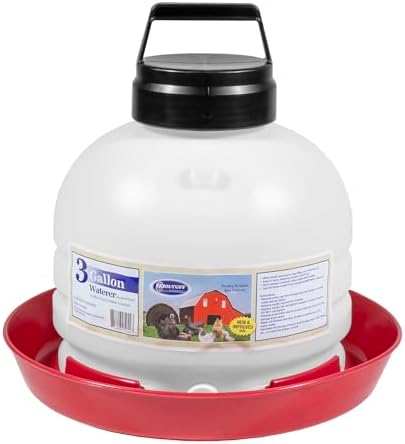


- Hydration Boost for Happy, Healthy Birds: Keep your flock energized and hydrated in hot weather or during stress. Our fa…
- All-in-One Support – Electrolytes, Vitamins & Probiotics: Packed with essential electrolytes, immunity-supporting vitami…
- Safe for All Species & Ages of Poultry: Whether you raise a few hens or a full flock, this multipurpose formula supports…